
Poets
transformative encounters
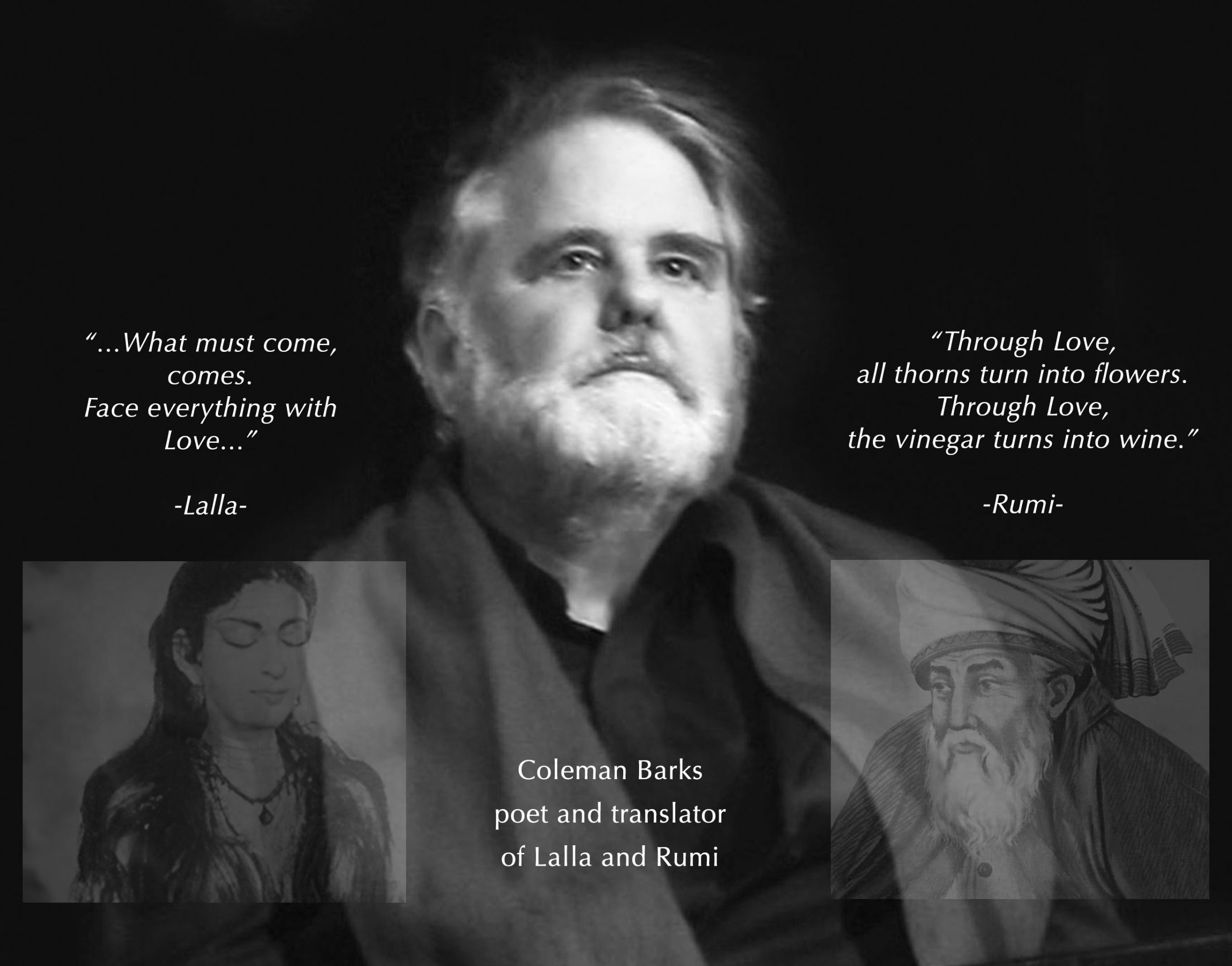
Coleman Barks
Coleman Barks is one of the nation’s most celebrated poets and translators of the teachings of 13th Century Persian poet, theologian, and philosopher, Jelaluddin Rumi. Barks’ books on Rumi, including the best-selling Essential Rumi, have sold more than half a million copies world wide, and earned Barks a 2006 honorary doctorate degree from the University of Tehran in the field of Persian language and literature. Barks also interpreted and published the poetry of the 14th-centuryKashmiri poet, Lalla. Barks taught literature at the University of Georgia for three decades and was inducted into the Georgia Writers’ Hall of Fame. Barks has also published several collections of his own poetry. For over 25 years, he performed The Rumi Concert with Zuleikha and world performing artists including Glen Velez, Eugene Friesen, David Darling, Jai Uttal and poet Robert Bly. In 2022, Coleman Barks granted Zuleikha the use of his translations of Lalla’s poetry for performance, et al, in perpetuity. colemanbarks.com, rumiconcert.com
Rumi
Jelaluddin Rumi, popularly known as Rumi, was 13th a century mystic Sufi poet. Born in present day Afghanistan, he was a scholar, jurist and an Islamic theologian. His transformative encounter with the great dervish, Shams-i Tabriz, ignited his profound mystical poetry, exploring the Heart of Love. The poems and writings of Rumi have crossed borders to influence people worldwide. Rumi, whose poetry has been beloved in the East, now has become one of the world’s most popular poets in the West. His best known work is the Masnavi. The six-volume poem holds a distinguished place within the rich tradition of Persian Sufi literature, and has been commonly called “the Quran in Persian” Like other mystic and Sufi poets of Persian literature, Rumi’s poetry speaks of love which infuses the world.
Through Love,
all thorns turn into flowers.
Through Love,the vinegar turns into wine.
—Rumi
Lalla
Lalla, the 14th Century North Indian mystic, is a lioness. She rides the breath, and she knows the way of courage. Her attention is focused in these poems not through any cultural, or conventionally religious lens. Lalla’s naked awareness is the truth she knows, and that is always in motion, as she herself was, wandering and singing these songs in medieval Kashmir. Lalla, or Lalleshwari, was a pivotal figure in Kashmiri literature and spirituality, known for her simple yet profound Vakhs (quatrains) that blend Kashmiri Shaivism and Sufi ideas, emphasizing inner spiritual realization over external rituals, and forming the basis of the Kashmiri language’s literary tradition. Her life story involves enduring mistreatment in a harsh marriage, leading her to renounce worldly life for a spiritual quest, becoming a revered figure for both Hindus and Muslims.
What must come, comes.
Face everything with Love…
—Lalla